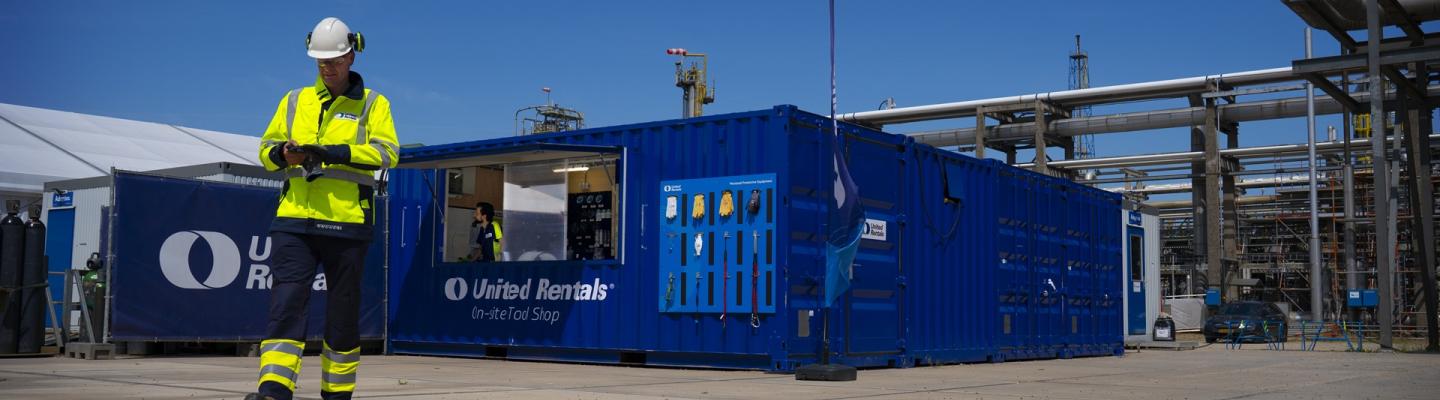
Running operations on a construction site, an industrial plant, or a remote infrastructure project means that the safety is never optional. It’s a must. Every site comes with its own visible and hidden hazards: from working at height to confined spaces and potential ignition sources. But safety isn’t just about identifying risks, it’s also about how you address them. It requires the right equipment, certified to perform under pressure, combined with a proactive mindset that puts safety first, creating a safer working environment.
In this article we will break down the real risks your employees face on site, and suggest the solutions on how they can be solved using the right rental equipment.
1. How Poor Lighting Increases Trip Hazards & Visibility Risks
Poor lighting is one of the most common yet preventable safety risk on any jobsite. Whether you're working through the night, in enclosed spaces, or during poor weather, reduced visibility increases the chance of accidents. For example, lighting towers offer a reliable, mobile solution to keep every corner of your site well-lit, inspection lights provide illumination in narrow spaces, allowing your team to continue working safely.
2. Lifting & Hoisting: Safe and Secure Operations at Height
When you are working at height, whether erecting scaffolding on a construction site, performing a plant shutdown, or maintaining infrastructure, it requires careful planning and the right equipment. A single misstep, a dropped tool, or the use of non-compliant gear can result in serious incidents. That’s why adherence to the Lifting Operations and Lifting Equipment Regulations (LOLER), or other applicable EU lifting safety standards, is essential. These regulations cover safe use of lifting machines, planning and supervision of lifting operations, lifting personnel, and the inspection of equipment.
Using the correct lifting equipment not only improves efficiency but also significantly reduces the risk of accidents. Our range of certified lifting solutions, including material hoists, tool tethering systems, and secure lifting platforms, is designed to support safe, reliable operations at height and help protect both workers and those on the ground.
3. Safe Handling of Chemicals: Minimize Risks, Maximize Protection
Working with chemicals requires the highest level of safety and precision. From water treatment plants to industrial cleaning and petrochemical applications each process demands equipment that supports compliance, reduces environmental risk and offers different solutions. For protecting your site and team starts with choosing the right equipment for the job. We provide modular and chemical storage tanks, spill containment berms, and double-walled piping systems , all designed for all kind of corrosive and harzadous liquids. These measures help ensure safe chemical storage, transfer, and handling, keeping both people and the environment protected. All our equipment is tested, certified and available for rapid deployment, helping you stay operational without compromising on safety.
Do you want to add chemicals to your process? We offer special chemical dosing unite that allows you to add safely chemicals to your processes in a controlled and secure way, reducing the risk of spills or overuse.
4. Battery-Powered Tools: Safer, Cleaner, and More Flexible
Working in confined spaces, tunnels, or wet worksite environments significantly increases the risk of accidents caused by trailing cables, hoses, or exposed electrical plugs. These risks are particularly common in industries such as construction, petrochemical processing, and ship repair, where space is limited and surfaces are often slippery or uneven.
Battery-powered industrial tools offer a safer and often more cost-effective alternative. They eliminate the need to hire and install temporary cabling and distribution boxes, helping to reduce both trip hazards and the risk of electrical contact with moisture or corrosive substances. With our ATEX-approved cordless tools, your team can work more freely and securely, even in high-risk or space-constrained environments.
5. Temporary Fencing: Clear Boundaries for a Safer Site
Keeping your worksite secure is essential for the safety of both workers and visitors. Unsecured perimeters, unclear access points, or open excavation areas can quickly lead to avoidable incidents. Temporary fencing offers a fast and effective solution to mark boundaries, control worksite access, guide site traffic, and prevent unauthorized access to hazardous areas. By clearly defining restricted zones, like separating pedestrian walkways from machinery routes, you help minimize the risk of accidents and create a safer, more organised working environment.
6. Telemetry: Smart Monitoring for Spill Prevention
Managing liquid levels manually can lead to overfilling, increasing the risk of hazardous spills on-site particularly in industrial, wastewater, or petrochemical environments With our telemetry and remote monitoring solutions, you gain precise, real-time visibility through radar level sensors that help prevent tanks from exceeding their limits. Automated pump control with start-and-stop systems ensure that pumping processes are managed correctly and stopped when necessary, reducing risks while improving site safety. Overall, adopting this approach enables better fluid logistics and minimises downtime at your worksite.
Keep Your Worksite Safe with the Help of Rental Based Solutions
Often keeping your worksite safe doesn’t have to mean large investments or complex logistics. With rental-based safety solutions, you get fast access to certified, regularly maintained equipment that directly addresses the most common safety risks: from working at height and power distribution to chemical handling and confined space entry. By combining rental equipment with proactive safety mindset, you stay agile, adapting quickly to changing worksite conditions or project phases without long-term storage or ownership concerns. This approach not only supports compliance with worksite safety regulations but also helps reduce downtime and keep teams focused on the job at hand.
 Facebook
 Linkedin
 Twitter
 Email
 Print
 Copy Link
 RSS Feed